
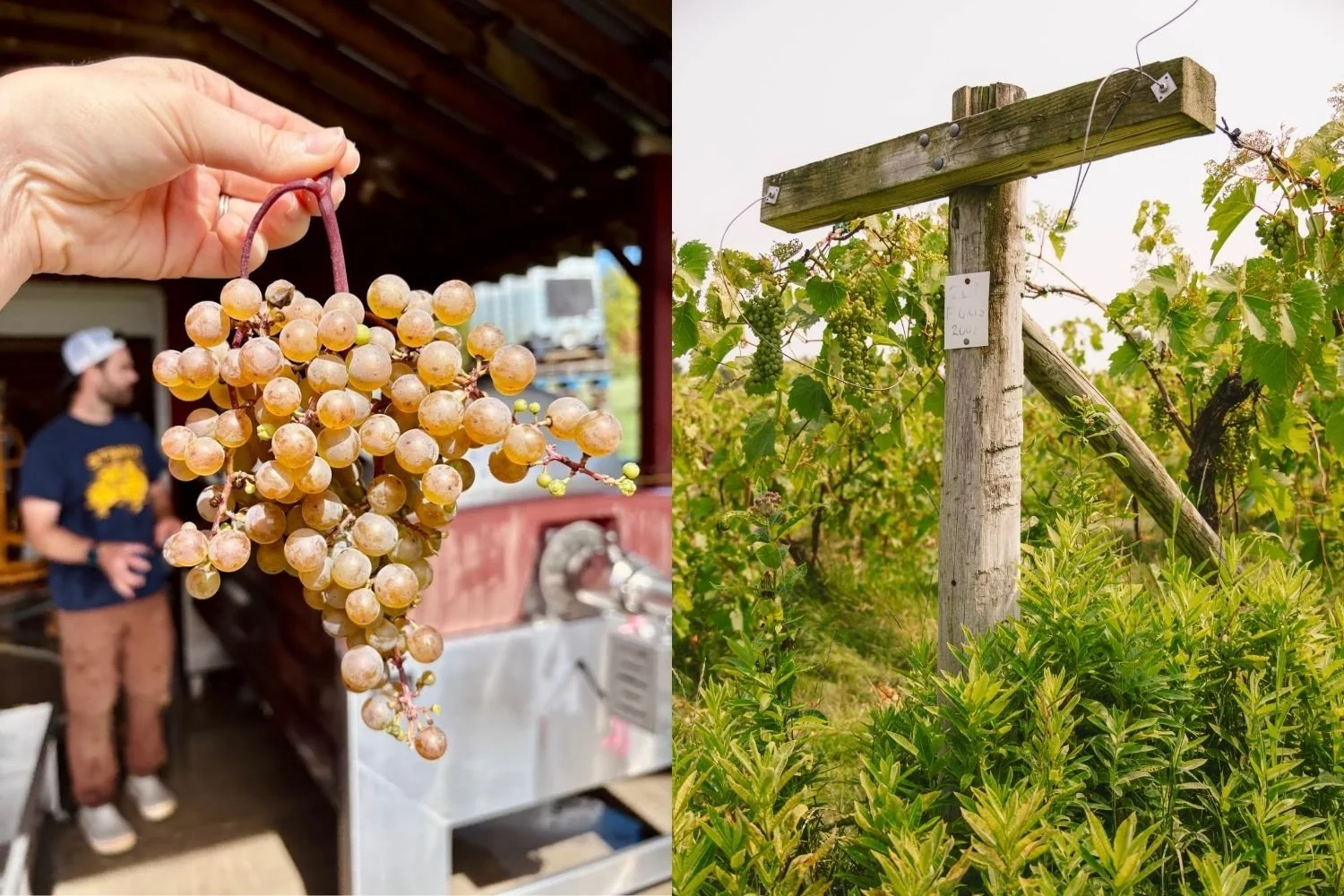
With the last of the grapes coming off the vines just yesterday, Harvest 2026 is officially in the books, but Vintage 2026 is just beginning. The fruit is picked and now we move into the cellar to care for it: pressing and pumping, tasting and planning, punching down and racking, and cleaning – mostly cleaning. So how was harvest ‘26? It was a gamble, but we think it’s paid off…
This harvest was tricky. It was a relatively cloudy and cool ripening season, and while it thankfully stayed quite dry, we didn’t have many of those hot and sunny fall days to push the fruit over the finish line. So we had to be patient. We had to give the vines time to care for their fruit. We carefully made picking plans, and then, when the forecast changed slightly, we carefully made new picking plans. We did that a lot.
We had to be defiant. Most of the growing season, we’re at Mother Nature’s mercy, responding frantically to her whims. Come harvest time we get gutsy, standing our ground, betting on our vines and their ability to handle whatever she throws at them, risking our fruit through rain or cold for the hope of just one more good day of ripening on the other side.
Contending with imperfect weather is one of the exciting challenges of making wine in a climate like ours. At this point in the season, we think often of a little piece of wisdom we learned from our favorite winemaker while working in New Zealand: “If you pick before a rain when the fruit isn’t ripe, you’re guaranteed to make a mediocre wine. But if you hang it, there’s still a possibility of making something great.” This year, more than any other since we’ve been at Lincoln Peak, we put this philosophy to the test.
So, in search of extra ripening days and with a healthy dose of courage, we decided to hang about 50% of the vineyard into the second week of October when most everyone else in the state had finished picking. The risk, we believe, has paid off. This year’s fruit is intensely flavorful, complex, vivid, and full of energy.
We chose what to pick and what to let hang on a vine-by-vine basis, doing multiple passes through each vineyard block at specific times. It’s labor intensive and time consuming, but carefully evaluating the condition of each vine is truly the greatest tool a winegrower has for ensuring ripeness. This multi-pass strategy is something often seen in cooler wine-growing areas known for white wine, like Austria and Germany, and we already have really high hopes for the 2026 wines.
Now comes the fun part: making the wine! You’ll find us in the cellar keeping track of more than 30 different fermentations, each one unique and demanding. Fermentation is dynamic, so we taste the rapidly changing wines every day, watching carefully to see how flavors evolve, discussing maceration and temperature, and making sure nothing goes wrong. There is no formula or standard recipe. Rather than make a wine that tastes identical year after year, our focus is on finding the best expression of each individual vintage. That is, to us, the beauty of wine driven by its terroir.
Stay tuned for more from us as the 2026 wines settle in for the winter. In the meantime, read on for a bunch of exciting events to come, and we hope to see you in the tasting room soon!