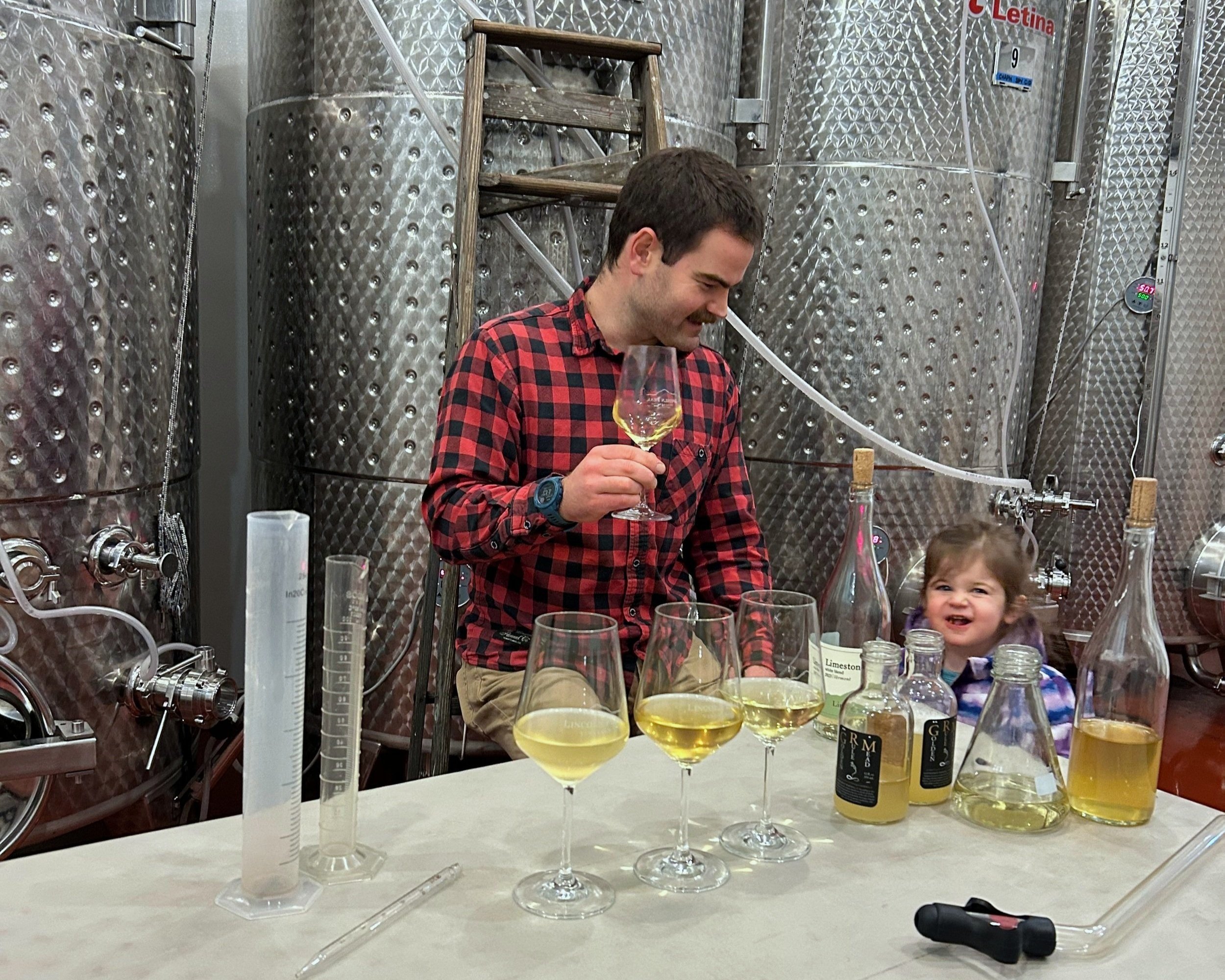
More than three weeks ago, with frozen fingers and the first frost crunching underfoot, we picked the last rows of Frontenac Noir, the last clusters of the 2025 harvest. That fruit is now wine, and this week, we rack the Frontenac Noir to barrel, tucking it in for its long, quiet rest. The madness of harvest continues long after we finish picking, but now that the most time-sensitive tasks in the winery are just about complete, we can finally say HARVEST IS OVER! Celebration requires too much energy, so for now we rest and reflect.
The 2025 growing season was an eventful one. Without the grace we gave ourselves in our first year of farming this vineyard, and with all that we had learned and wanted to do differently, the stakes felt high. A cool, misty spring with two frost scares and lots of disease pressure dampened our spirits right out of the gate. Eventually the clouds cleared, the sun shone, and the vines grew quickly, our confidence growing with them. An intense heatwave in July brought swarms of unwelcome Japanese beetles that turned leaves to lace. We tried to tell ourselves that they were helping to thin the canopy and expose the fruit but we weren’t convinced. Thankfully, the heat soon broke and the beetles disappeared as quickly as they arrived, sparing the vines from any lasting damage.
The next couple months were the real story of the 2025 vintage. At the beginning of August, just as the clusters began to ripen, a dry pattern settled in with abundant sun, warm days, and cool nights that made us feel like we were back in California. The ensuing drought was devastating for most farmers in Vermont, but this is the weather that every winemaker dreams of in the run up to harvest, keeping berries small, concentrating flavors, and staving off rot and mildew. Without rain storms to force our hand, we were able to pick exactly when we wanted, an unthinkable luxury that made harvest feel almost leisurely.
The dry weather led to lower yields in the vineyard but exceptional quality in the winery, characterized by big, structured wines that will outlive us. We harvested a total of 13.7 tons of fruit this year, including 7.8 tons picked in a massive 5-day push just before a big rain and the first frost. That's the kind of picking timing that produces great wines and is only possible because of our community of volunteers and their dedication to harvest. We simply can’t thank them enough.
The end of the season brings relief, satisfaction, and joy, as well as a strange sense of mourning as the vineyard goes dormant. These plants that you’ve marveled at and worked with all year, inspired by their ambition, feeding off their energy, so suddenly lose their leaves and become skeletons. But the wines, those eternal legacies of the growing season, are there to comfort us throughout the winter until the vines greet us again in the spring. And then we get to do it all again.