
The arrival of early and eager Adalmiina means harvest is officially underway at Lincoln Peak, yet we still have a week or two before our next pick. We’re in the Great Lull, the stretchy interlude between the activities of summer and fall. We worked tirelessly with our wonderful team all year to tend the vines, laying canes and wrapping shoots, clipping and combing and thinning, walking the long rows again and again, all with one goal in mind: to raise resilient vines able to ripen fruit that bears the unforgeable signature of place.
Our job is, momentarily, done. Now we get to sit back and watch the vines work, converting the last photons of summer to sugar and flavor. We are waiting for the Goldilocks moment when the vine has reached its reproductive acme. Achieving fruit ripeness is a vine’s sole evolutionary task; it lives to pass on its DNA, guarded in the seed of its fruit, but its roots keep it firmly in place. So the vine produces colorful and delicious berries to attract seed dispersers like birds and deer, who will eat the fruit and drop the seeds elsewhere. When the grapes are ready to be nature’s dessert, they are ready to make wine.
The vines will tell us when we have reached this moment. Monitoring concentrations of sugar and acid is helpful, but the real tell comes from our intuition, and from lots and lots of tasting. We walk the vines, plucking berries from all sides of the cluster, in all parts of the canopy. We taste from the morning side, then the evening side, then the morning side again. We think about the flavor, the complexity, the balance, the richness. We chew on skins and crunch through seeds, noticing textures on our tongues, evaluating bitterness and astringency. We feel how the seeds separate from the pulp, whether they slide away with ease, ready for dispersal, or stay trapped inside, protected and continuing to ripen. We spit out the seeds to check for lignification, pressing a fingernail through to see whether any green remains, or if it’s ripe, brown and impenetrable. Berry analytics serve as a gut check, a little nudge in the right direction. But the most revealing indicators are the ones you can’t measure. After all, making wine, just like drinking it, is more about feeling than anything else.
More than any other moment during the year, the ripening period after veraison is the greatest informant for our winemaking decisions in the cellar. It will indicate how much time we let the juice soak with the skins, how gently we press our whites, whether to include stems or whole clusters in our ferments. This is the human side of vintage variation, entirely predicated on what we taste off the vine. Over time spent in our vineyards, we learn to read our fruit like sheet music, letting it reveal to us the unique sound and color of the season, the melody and the harmony, the dynamics and the timbre. It is humbling, this admission, knowing it is not really up to us to decide. We are merely the musicians playing nature’s score.
With very little left to do in the vines, the ripening period is a time of mixed emotions for us. We diligently scrub the winery, preparing tanks for fresh juice. We feel pride and joy, satisfaction and relief for all that we accomplished during the season, but our minds fall prey to the anxious anticipation of the upcoming rush. After months of proverbial sprinting, we come to a screeching halt, and it takes some time before our cortisol drops, before we can take some deep breaths and prepare ourselves for the marathon of harvest.
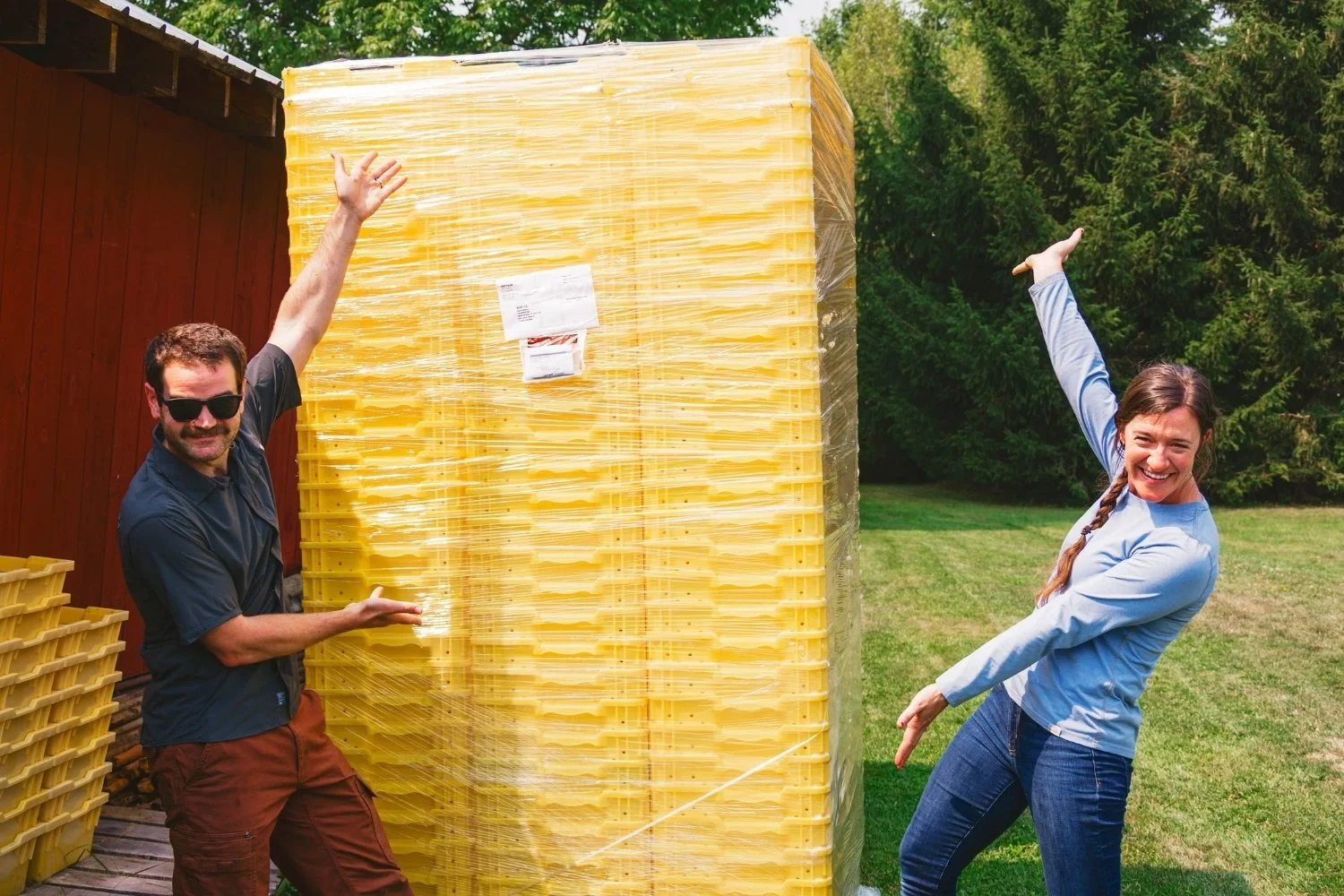
For now, as always, the power lies with Mother Nature. In the words of the late Wendell Berry, our early September pursuit is only to “come into the peace of wild things.” There will be more work very soon, when the secrets of the season are revealed as we steadily unload small yellow picking bins onto the crush pad.
In the meantime, we hope to see you in the tasting room! Fall’s beautiful display of color is just around the corner, and we couldn’t imagine a more perfect time to enjoy a glass of wine on the porch.