
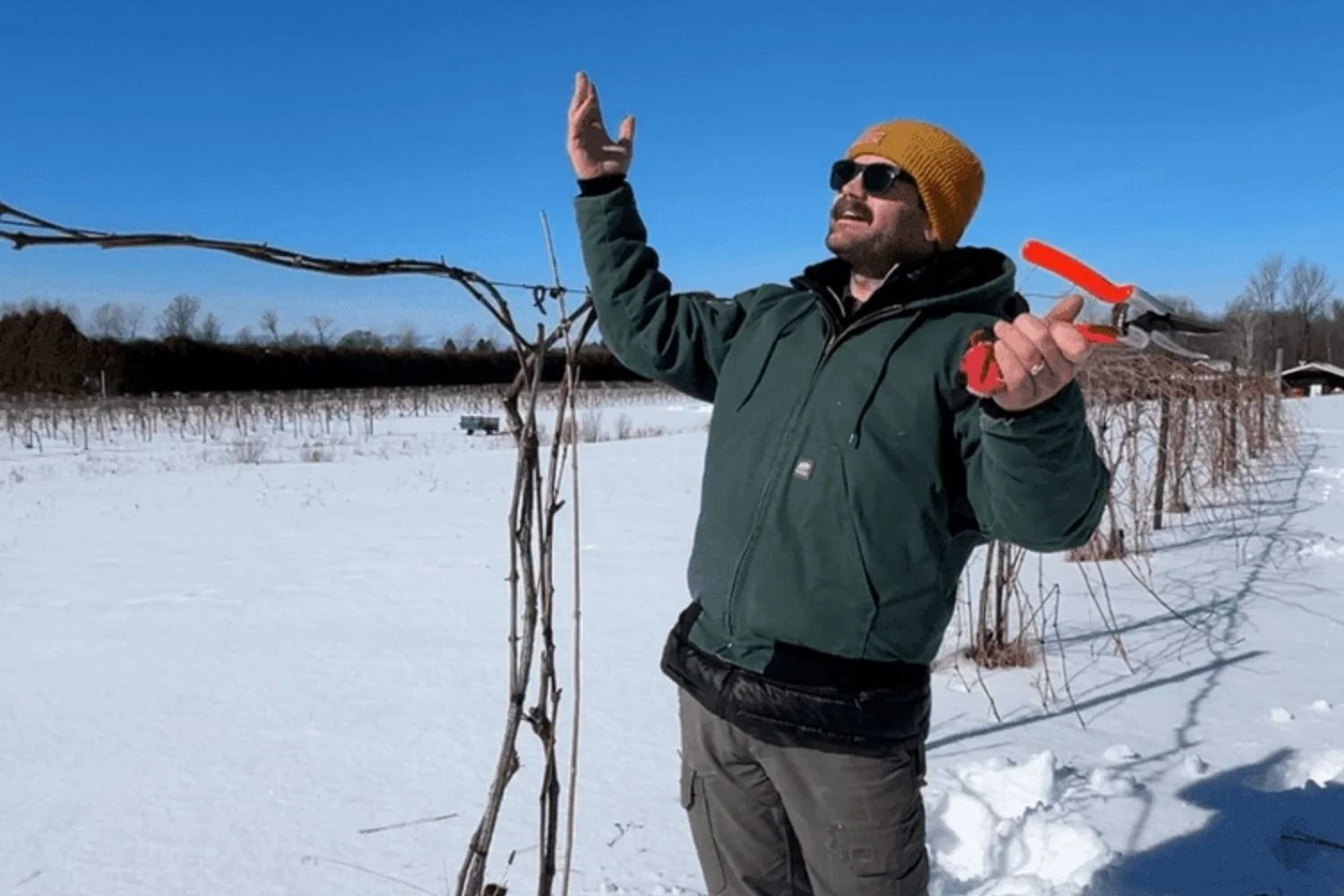
As the sun strengthens and the days grow longer, we jump boots first into our favorite vineyard task of the year: pruning. Pruning is like pressing a vine’s reset button, shedding the wood that laboriously produced last year’s harvest and making room for new growth. We may remove up to 90% of the vine’s wood every year, each cut strategically placed to maximize the plant’s potential and longevity. Nothing we do in the vineyard has a bigger, more lasting impact on the vine’s ability to fully and sustainably ripen fruit than pruning.
To better understand how and why we prune, let’s start by looking at the cycle of growth that the vines go through every year.
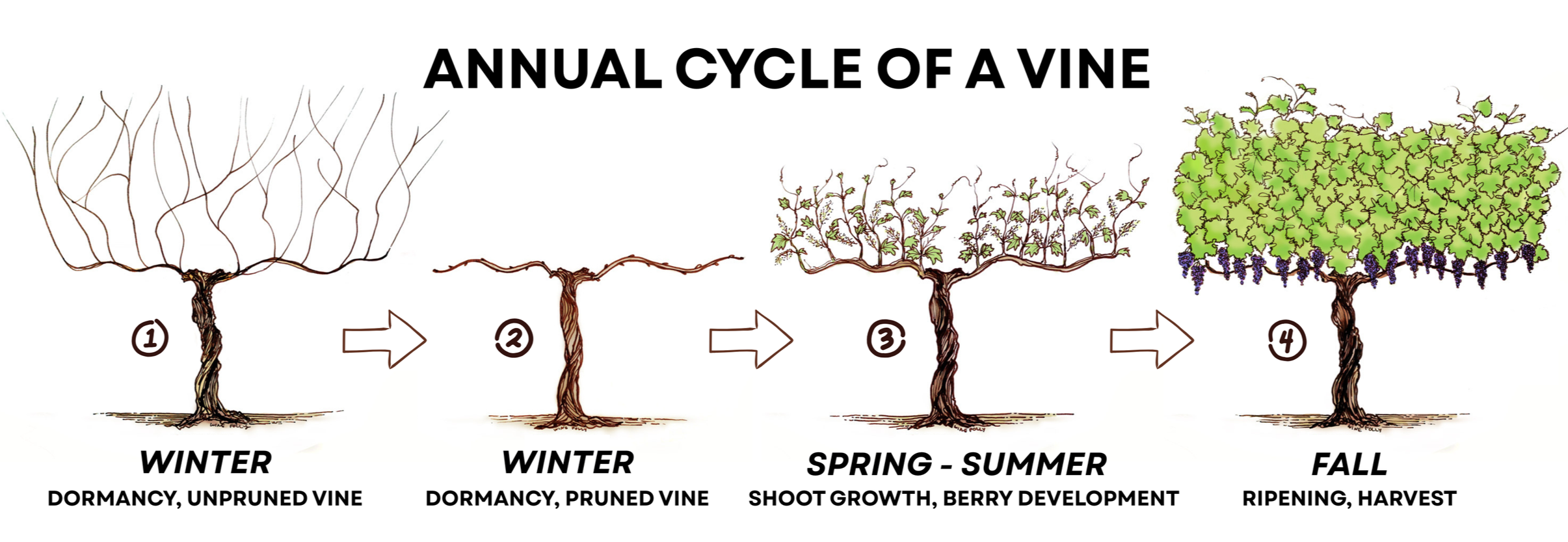
After we harvest the fruit in October, the vine sheds its leaves and enters dormancy in the same way that many other plants do. The once tender, green shoots harden and lignify into woody canes and the vine is left looking much like a tree in winter (1). Once fully dormant, we prune the vine, removing most of the previous season’s growth, shaping the vine along the fruiting wire, and selecting the buds from which next year’s shoots will grow (2). In spring the vine awakens, growing new shoots from the exact buds that we intended (hopefully) and quickly adding leaves and grape clusters (3). The fruit ripens, we pick it and make wine, and the vine prepares for its winter rest, starting the cycle anew (4).
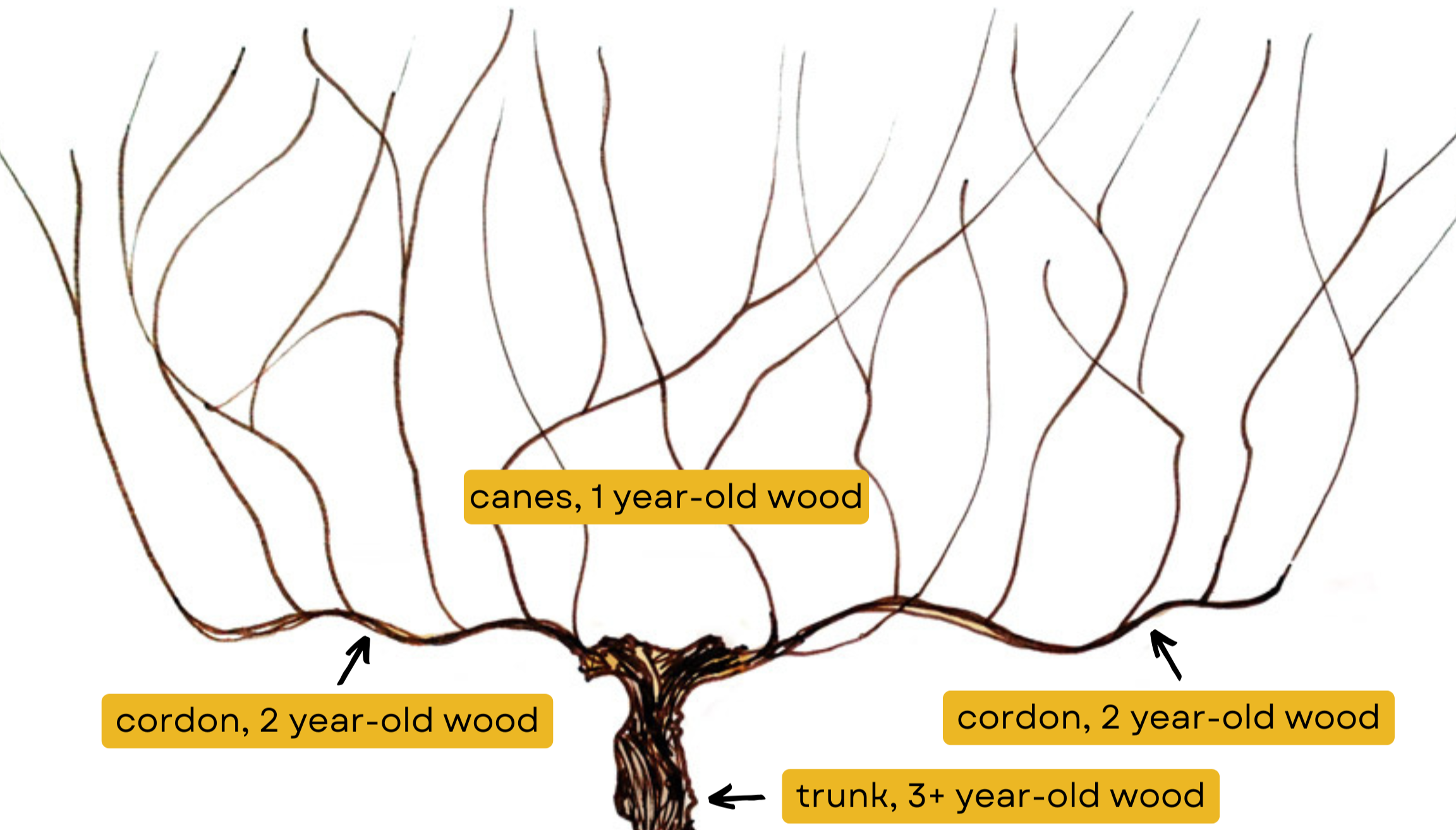
It’s important to understand that these vines are not particularly interested in growing delicious grapes and making great wine. Left to their own devices, they prefer to grow mostly from their tips, spreading wildly as vines do. Spaced evenly along each of the canes depicted above are dozens of buds from which new growth originates in the spring. If left unpruned, all of these buds would push, growing hundreds of new shoots stunted by a fierce competition for resources and supporting tiny clusters of grapes that would struggle to ripen in the crowded, humid, shady canopy. Yuck.
So we prune, strategically selecting just the right number of buds for the vine to focus on to keep it balanced and organized. There are a few different pruning systems but we mostly use a technique called cane pruning, whereby we pick two strong, healthy canes, trim them to the correct length, and cut everything else away. In order to keep the vine compact and remove as much old wood as possible, we look for canes that are growing close to the trunk. Upstream of these we leave two renewal spurs - canes cut back to a little stump with a single bud that we hope will generate the perfect cane for next pruning season.
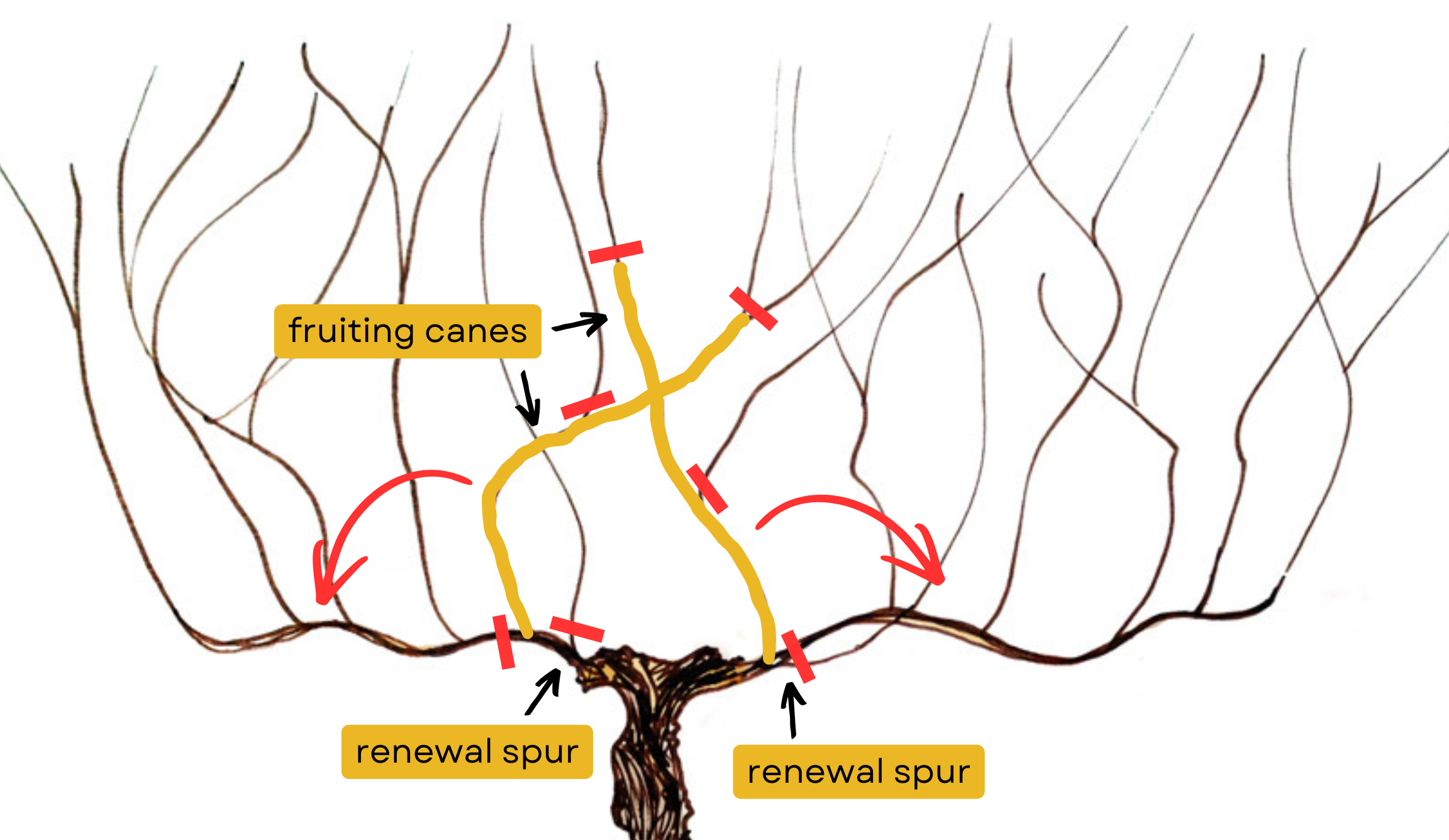
We then gently maneuver our precious fruiting canes to the supporting trellis wire and tie them up. The buds on these canes - now referred to as cordons - are the source of all of the next season’s growth. The new shoots will grow in one direction, evenly spaced, each supporting a couple clusters of grapes neatly organized into what is called the fruit zone. We can now easily manage the vines throughout the season, maximizing sunlight and airflow, and focusing energy on ripening the very best fruit we can. After all, great wine starts in the vineyard.
